
Imagine a Nativity where stuffed bunnies and giraffes replace the shepherds and wise men. This is what often happens at my house. My girls love to see their treasured everyday toys worshipping Jesus. These little girls have learned that the Nativity is a safe and sacred place, and they want to be there with their favorite toys.
What you might see as “just play” is actually young children making personalized meaning of the story of the Incarnation. They don’t need the deep theology to recognize his deep love for them.
As children’s ministry leaders and Christian parents, you can provide meaningful traditions that will support your children’s faith formation both at church and at home.
Why Traditions Work for Young Faith Formation
One of my favorite early childhood education experts, Sally Haughey, wrote in her book Nurturing Brilliance, “The sensory system is the doorway to learning for young children.”1 Wow, if that is the case, and I believe it is, then the Advent season is a hallway full of opportunities for the sensory system.
The smell of frankincense and myrrh, the sparkle of plastic gold coins, the folds of Mary’s dress in the Nativity, the jingle of bells, lights throughout the neighborhood, and the sweetness of gingerbread cookies. All of these sensory experiences of the season provide doorways to not only learning about Jesus, but also authentic faith formation.
Traditions aren’t just special because of what we do; they are special because of who we share them with. Children love Advent traditions because they share them with those they love, including baby Jesus. These relationships play a crucial role in faith formation.
In fact, it is part of the way Rebecca Nye defines children’s spirituality, “relational consciousness.” She writes, “In childhood, spirituality is…responding to a call to relate to more than ‘just me’ – i.e. to others, to God, to creation or to a deeper inner sense of Self.”2
Citation
1. Nurturing Brilliance by Sally Fowler Haughey
2. Children's Spirituality by Rebecca Nye
Principles for Choosing Formative Traditions
While some traditions come and go, if you want to plan ones that will form faith year after year, look for these things:
- Sensory – fully embodied and engages the child’s senses
- Relational – invites relational growth with God, others, and self
- Participatory – children don’t just watch, but are active and creatively engaged
- Points to Jesus – provides an opportunity for children to encounter Jesus
- Sustainable – one-off activities can be great, but if you are looking for a tradition, it has to be something you can and want to come back to year after year
Tradition Ideas
Sensory
Our lives are already filled with sensory input. You can easily make your kids’ favorite activities more intentional and use the bodies that God designed to explore the birth of Jesus.
Add frankincense and myrrh essential oils to homemade playdough. Keep the expectations low and free play, or use salt dough to make ornaments to gift to loved ones.
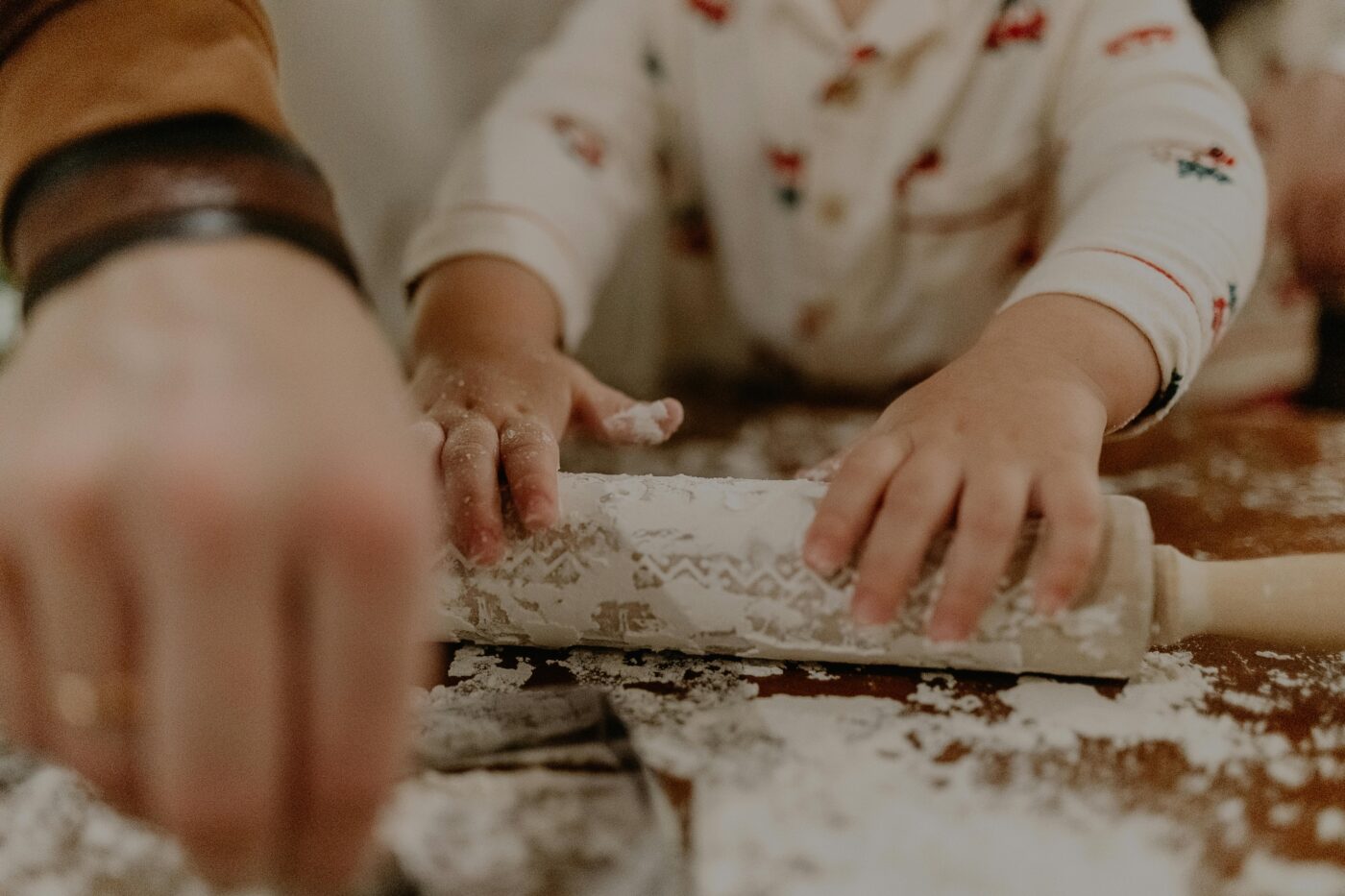
Holiday baking is a given, but by including your children and dropping a few faith-based conversation starters, you have just made this a sweet and joy-filled, faith-forming Advent tradition.
If your children love dress-up, why not supply all they need to create their own Nativity scene? A couple of sheets or robes, a baby doll, and some stuffed animals. I bet with a little encouragement, the kids can find anything else they may need.
Story and Song
Stories and songs are easy and timeless Christmas traditions. To provide faith-forming opportunities doesn’t mean you need to let go of your favorite secular activities; just invite Jesus along. He’s happy to be included in all of it.
Sing some of your favorite carols along with Jingle Bells as you drive through the neighborhood looking at Christmas lights (and how many Nativity scenes can you find?).
You can read about the birth of Jesus in your favorite storybook Bibles alongside picture books of elves, stockings, and sleigh rides. Questions and conversations are key and can bring faith moments into any story time.
Then, don’t just rely on the creativity of others. Try your hand at writing a Christmas song. Pick a few words that everyone must include, and let’s see what you can come up with.
Giving and Generosity
It can be easy to create an environment for kids to become a little self-focused at Christmas, but as children’s ministry leaders and Christian parents, we can help encourage generosity and giving.
By exploring the gifts the wise men brought to Jesus, we tie beloved presents to the Nativity story. Don’t forget to talk about Jesus as a gift as well. Try questions like:
- Why did they think these were good gifts for a baby?
- What did they represent?
- What did the gifts say about Jesus?
- What might these gifts look like today?
- What gifts would you bring to baby Jesus?
Invite children to bring a piece of clothing or a toy they think someone else might like. They can practice empathy along with generosity as they determine whether something is still in good enough condition to give to another child.
A favorite activity I have done with kids of all ages is packing dinner baskets. You can get the entire church involved and create many baskets, or pack for a single family. Sometimes the dinner gets a little eclectic, but make sure it has all the basics. Adding in some cards or art by kids and a prayer can be special, too.
Treasuring the Story
Christmas traditions don’t need to be Pinterest-perfect or performance-ready to help kids make meaning of the season. Think about Christmas through little eyes and then point them to Jesus with joy and love.
I think some of the best traditions are not only the ones that come back year after year, but also those that help kids treasure them in their hearts, as Mary did in Luke 2:19 NIV, “But Mary treasured up all these things and pondered them in her heart.”
-
Citation
1. Nurturing Brilliance by Sally Fowler Haughey
2. Children's Spirituality by Rebecca Nye