
A Special Guest Blogger
We are honored to share with you a guest post from Dr. Dana Kennamer. She has not only a passion for children's books, but a beautiful understanding of how to use them well for children's spiritual formation. This month, as we explore curiosity, Dana shares with us how we can best use children's books to help children explore many topics they may be curious about. We hope this article blesses you and the children you serve in churches and homes.
I love children’s books! I confess that when I enter a new bookstore, the first section that I typically visit is the children’s section. High-quality children’s books can be sources of beauty, humor, insight, and often helpful or even challenging truth. C. S. Lewis said that “A children’s story that can only be enjoyed by children is not a good children’s story in the slightest, and no book is really worth reading at the age of ten which is not equally—and often far more—worth reading at the age of fifty and beyond.” Good children’s books are not just for children. When I read to my own children when they were little, now full-grown adults in their thirties, this was true. It continues to be true when I am teaching university students or speaking to adults. Quality children’s books are for all ages.
The Power of Children’s Picture Books
This is because well-written stories have tremendous power. Anita Woolfolk (2019) emphasizes the importance of stories for learning and development. She describes the power of stories to engage multiple areas of our brain, helping us learn, reflect, and remember. Stories activate memories, experiences, feelings, and beliefs stored in our neural networks. We remember stories better than we remember isolated facts.
Books provide a rich context for exploring empathy, friendship, conflict, emotions, differences, joys, and struggles. Laurie J. Harper (2016) tells us that high-quality picture books have the potential to heighten children’s “awareness of emotions, enhance their sensitivity to others’ feelings, promote empathetic behaviors toward others, and foster moral development.”
As we share books with children, we can enter together into a meaningful conversation about both the normal stuff of life and the hard stuff as well. As we explore stories, children can feel validated because of the ways they can relate to the characters. At other times, they “vicariously experience the character’s thoughts and feelings, and ultimately gain insight for problem solving and decision making” (Kemple, 2004). Quality children’s books draw us in so we can see ourselves and also see how we are connected to others.
What About Children’s Spirituality?
So how does this relate to nurturing children’s Christian spiritual formation? In many ways, the connections are easy to see. And still, we want to make sure that we intentionally focus on nurturing our children’s journeys with Jesus. One helpful first step is to define children’s spirituality from a Christian perspective. Holly Allen has provided a helpful definition for us.
“Children’s spirituality is a quality present in every child from birth by which children seek to establish relationships with themselves, with others, and with God” (Allen, 2021).
Books that help children connect with themselves and others can provide a context for reflection on how Jesus calls us to live in this world. That is a spiritual practice. The books I will recommend are almost exclusively not published for a Christian audience, but they provide a context for conversation about how we see ourselves, others, and God. The critical piece is the adult who joins them in the conversation.
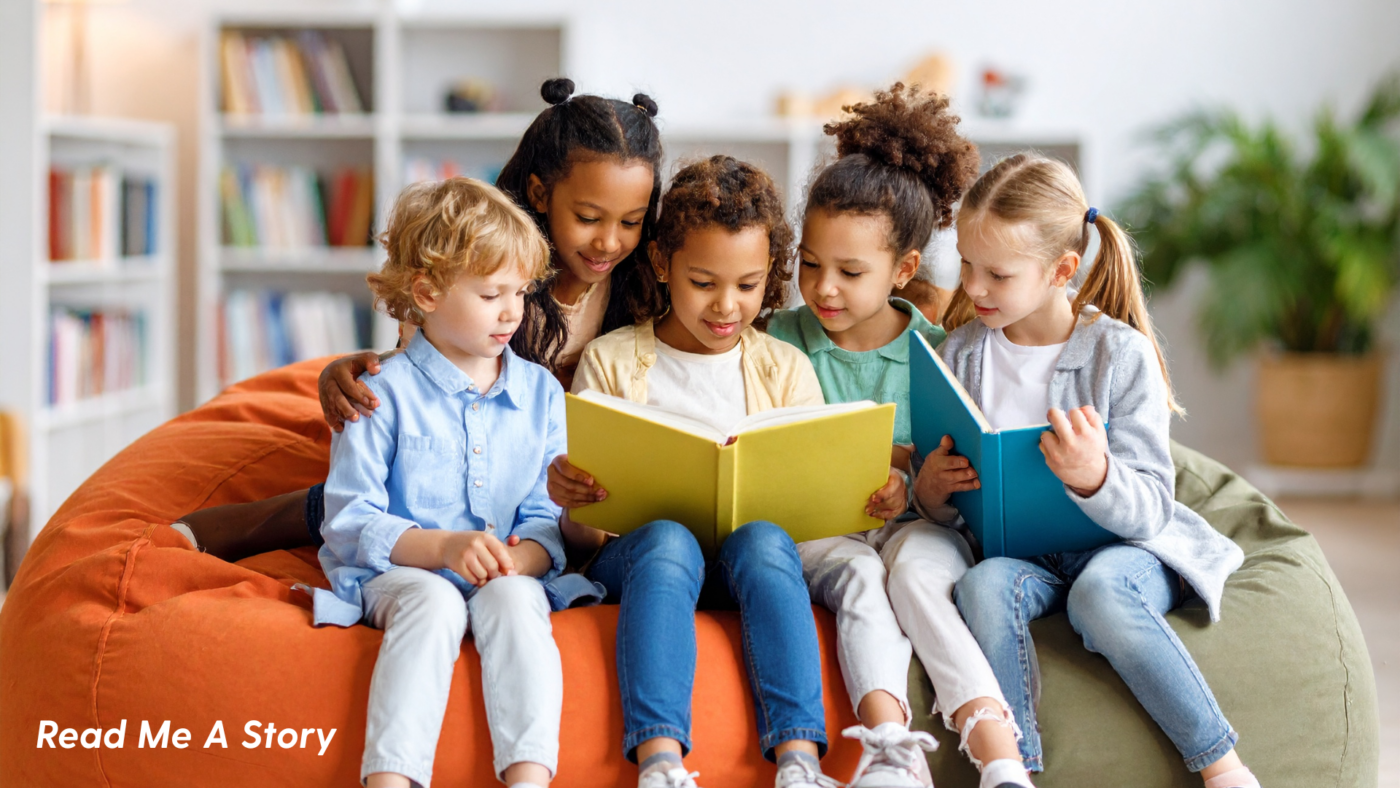
It is important to see books as a context for conversation. In literacy education, we often talk about the interactive read-aloud approach. This approach recognizes that reading a book to a child or to a group of children is not just a time for children to listen while we read. It is a time to enter the text together. We invite children’s observations about the illustrations and words. We allow for meaningful interruptions in the reading. Questions and connections are valued in this dynamic approach to reading a book together. We notice. We wonder. We connect. And we wander around together in the words and pictures the author provides.
Again, the books I will recommend to you are almost all not written exclusively for a Christian audience. Still, they provide a space for conversation about connecting with God, ourselves, and with others. As we enter the text together, we intentionally invite God into the conversation – asking questions and talking about how we see the connections between the book and Biblical perspectives.
Understanding Myself
Holly Allen’s definition starts with the child’s relationship with themselves. One critical aspect of self-awareness for children (and adults as well) is to understand their own emotions. The ability to recognize and name emotions is critical for children as they develop the ability to regulate their emotions and respond to others with empathy (Kaiser & Rasminsky). Children need a vocabulary for identifying their emotions in order to regulate their responses to these often-strong feelings. As they do this, they are prepared to see how others feel and approach them with understanding and friendship.
When I think about this, I am reminded of the gift God provides in the Psalms. These songs give us words for our fear, hope, anger, joy, loneliness, praise, sorrow, gratitude, and confusion. God provides us language and invites us to speak honestly about what we feel. Almost all the hard psalms end with an “and still.” Despite the hard things, we will still choose to trust, to praise, and to hope. We need a language, and God gives it to us. Children need language as well.
Borrowing a strategy from Karen Henley, the author of The Beginner’s Bible, I sometimes read sections of the Psalms to children and ask them to identify the feelings of the psalmist and name times when they have felt that same way. Then we hold our hands in front of us and say, “God, sometimes I feel ___. I will bring that to you and choose to hope and praise you anyway.”
There are many wonderful books that help children develop ways to understand and describe their emotions. Kids have BIG feelings. An important step to responding appropriately to these feelings is to name them.
One feeling that we all share is worry. Children worry too. A wonderful picture book to use to explore this anxiety we feel is Wemberly Worried, by Kevin Henkes. This is the story of a sweet mouse named Wemberly who worries about everything. But as her first day of school approaches, she has lots of new worries. It is our tradition with my kindergarten and first-grade friends in our children’s ministry to read this book and name our worries at the beginning of each school year. Then we read together Matthew 6:25-26.
Matthew 6:25-26 NLT
That is why I tell you not to worry about everyday life—whether you have enough food and drink, or enough clothes to wear. Isn’t life more than food, and your body more than clothing? 26 Look at the birds. They don’t plant or harvest or store food in barns, for your heavenly Father feeds them. And aren’t you far more valuable to him than they are?
We write our worries on paper birds and place them on a large paper cross on the wall, and pray over these worries together. When we return the following week, we name ways God was with us in our first days of school. Then we read Philippians 4:6. “Don’t worry about anything; instead, pray about everything. Tell God what you need and thank him for all he has done.” We talk about how God was with us and name things we are thankful for as we started the new school year. We write our gratitude on small cards and add these to the cross.
Wemberly’s worries are often silly, but the children identify with them, seeing themselves and others in the story. They recognize that worry is a normal response, and that God gives us ways to find peace in the process.
There are other wonderful books I have listed below that can provide children with language to describe their strong emotions. One of my mentors, Jane Coates, often said, “Children’s feelings are immediate, intense, and personal.” They need ways to name these big feelings so that they can respond rather than react. And they need to know that they can take their strong feelings to Jesus.
- Big Feelings by Alexandra Penfold and Suzanne Kaufman
- The Way I Feel by Janan Cain
- Today I Feel Silly by Jamie Lee Curtis
Seeing Myself and Seeing Others
A good book is a lens – a way of looking. One of the most powerful descriptions of this invitation to see through books comes from Rudine Bishop (1990).
Rudine Bishop
Books are sometimes windows, offering views of worlds that may be real or imagined, familiar or strange. These windows are also sliding glass doors, and readers have only to walk through in imagination to become part of whatever world has been created or recreated by the author. When lighting conditions are just right, however, a window can also be a mirror. Literature transforms human experience and reflects it back to us, and in that reflection, we can see our own lives and experiences as part of the larger human experience.
This perspective reminds me of the parables of Jesus. At times, when people asked Jesus a question, he told them a story. These parables invited people to enter the story to see themselves and others and to invite them to respond to the message often hidden within the story.
The Parable of the Good Samaritan is a powerful example of this. The expert in the law knew the answer to his own question. “You must love the Lord your God with all your heart, all your soul, all your strength, and all your mind. And love your neighbor as yourself” (Luke 10:27). But then he wanted to justify himself and asked, “Who is my neighbor?”
Children’s books can help us explore this question together. Who is our neighbor? In my faith community, we have welcomed all kinds of children with all kinds of stories. From children with disabilities to those who have experienced the death of a parent, sibling, or friend. Children in foster care and those with incarcerated parents. Some have experienced serious poverty, and others have had an undocumented parent deported. Some children joined their family through adoption, and some have families that have been impacted by divorce. These can be tender and often hard topics. Picture books can provide the windows, mirrors, and doors we need to see ourselves and others and answer the question, “Who is my neighbor?’
Susan Mankiw and Janis Strasser (2013) remind us not to view these “tender topics” as problems. These are the everyday lives of children and families that we welcome into our spaces. It is their normal. Picture books can provide “mirrors” for the children who share these stories. They can also be opportunities for other children to meet characters whose lives may not be like their own – windows to help develop Christian compassion and hospitality.
Mankiw and Strasser provide the following guiding questions to help us think about how to share these books with children:
- Should you be the one to discuss this tender topic with a child, or should you first confer with a parent?
- Is the book appropriate for all the children in the class, or is it especially appropriate for one particular child?
- Should you read the book to the whole group, a small group, or just one child?
- What do you know about how the topic affects the children in the program?
These are some wonderful books that I recommend for engaging in these important “tender topic” conversations:
- Understanding various disabilities: Just Ask!: Be Different, Be Brave, Be You by Sonia Sotomayor
- A child in foster care: Home for a While by Lauren H. Kerstein
- A child experiencing divorce: Two Homes by Claire Masurel
- International adoption: Tell Me Again About the Night I Was Born by Jamie Lee Curtis
- An incarcerated parent: Visiting Day by Jaqueline Woodson
- A family who is unhoused: Home by Tonya Lipert
- An undocumented father who is deported: Something Happened to My Dad by Ann Hazzard and Vivianne Aponte Rivera
- Understanding grief: A Shelter for Sadness by Anne Booth
- The death of a parent: Missing Mommy by Rebecca Cobb
- The death of a grandparent: All Will be Well: Learning to Trust God’s Love by Lacy Finn Borgo
- The death of a newborn sibling: The Moon is Always Round by Jonathan Gibson
There are also wonderful books that explore how to walk through the “sliding doors” and answer the call to love our neighbors. One of my favorites is the lovely wordless picture book, I Walk with Vanessa: A Picture Book About a Simple Act of Kindness by Kerascoët. In this simple book, we see a little girl who observes one of her classmates being bullied. She decides to meet her at her house the next day and walk with her to school. Gradually, she is joined by many other children as they walk with Vanessa. This book shows how God can multiply one simple act of kindness if we choose to listen to His voice. Love it!
The following are other books to explore how our actions can affect others in important ways, providing opportunities think about how we all answer Jesus saying to us, “Follow me!”
- The Way I Act by Steve Metzger
- This is Our House by Michael Rosen
- Peace is an Offering by Annett LeBox
- What Does it Mean to Be Kind? by Rana DiOrio
- Be Kind by Pat Zietlow Miller
- Come with Me by Holly McGhee
So Many Books! So Little Time!
I wish I had more space to explore picture books with you. I have a very full shelf and a constantly growing list. Take some time to sit in the children’s book section in your area bookstore or library. Imagine how the stories you find connect with our call to love God, ourselves, and others. And remember that picture books can be an invitation. An invitation to see yourself and to see others through the eyes of Jesus – whether they are written for a distinctly Christian audience or not. These books provide a place to connect with children and engage in meaningful conversations about this spiritual journey we are taking together. Happy reading and feel free to share your favorites with me as well. I always love finding a new treasure!
Sources
Allen, H. (2021) Forming Spiritually Resilient Children, Intervarsity Press
Bishop, R.S. (1990) Choosing Books for the Classroom, Perspectives
Harper, L.J. (2016) Using Picture Books to Promote Social-Emotional Literacy, Young Children
Kaiser, B. & Rasminsky, J. (2017) Challenging Behavior in Young Children: Understanding, Preventing and Responding Appropriately, Pearson
Kemple, K.M. (2004) Let’s Be Friends: Peer Competence and Social Inclusion in Early Childhood Programs, Teachers College Press
Mankiw, S. & Strasser, J. (2013) Tender Topics: Exploring Sensitive Issues with Pre-K Through First Grade Children through Read-Alouds, Young Children
Woolfolk, A. (2019) Educational Psychology: Active Learning Edition. Pearson Learning Solutions
Guest Blogger
-
Dr. Dana Kennamer
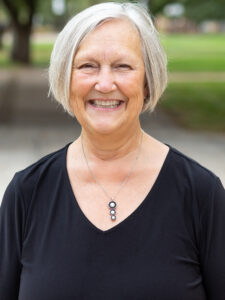
Dana serves as the Associate Dean of the College of Arts, Humanities and Social Sciences at Abilene Christian University where she teaches courses in early childhood education and children’s ministry. Prior to entering higher education, Dana served as a classroom teacher in preschool and elementary grades in Miami, Houston, San Antonio and Abilene.
Dana earned a doctorate from the University of Texas at Austin in Early Childhood Education in 2001. Her dissertation explored young children’s perceptions of God from a contextualist perspective. Dana’s other publications include Along the Way: Conversations about Children and Faith, I Will Change Your Name: Messages from the Father for a Heart Broken by Divorce, and Let All the Children Come to Me: A Practical Guide Including Children with Disabilities in Your Church’s Ministry.