
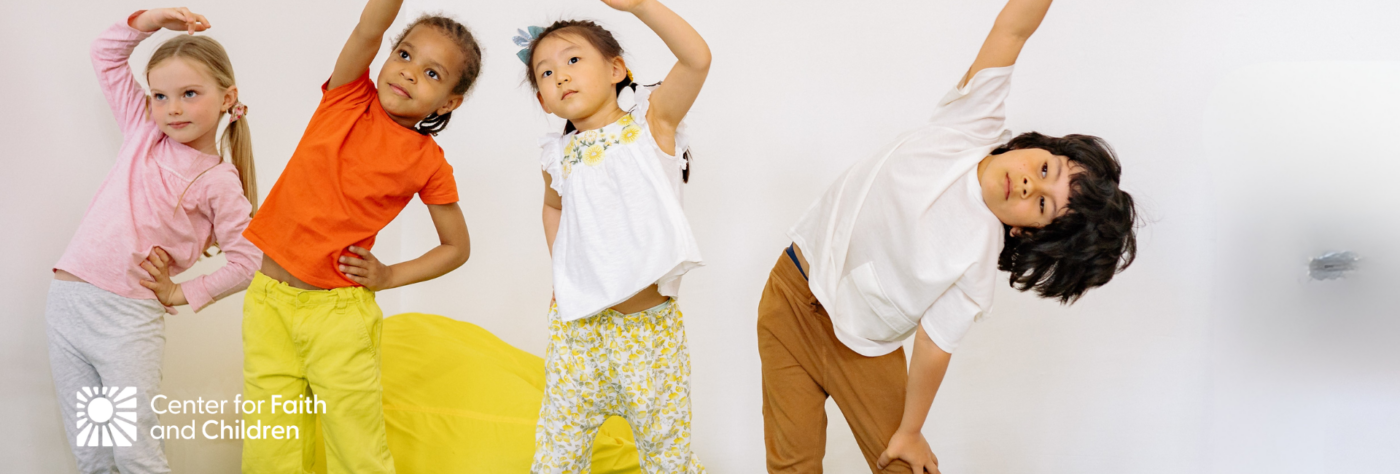
In my first ministry role as a midweek coordinator, there was a third-grade boy who simply could not sit still. It drove me crazy! He was up, down, over the chair, under the chair, beside it—sometimes even dancing around it. He never stopped moving. In my youth and inexperience, my frustration grew because I assumed he wasn’t paying attention. For me, this child was just misbehaving and causing chaos for me and the rest of the group!
I couldn’t have been more wrong. God was gracious to me in that season of ministry and placed a wise, 70-year-old retired schoolteacher named Pearl alongside me. She had taught generations of children and carried a deep, intuitive understanding of how they learn and behave—long before educational language and formal diagnoses gave us categories for what she had already observed with wisdom and compassion. One evening, Pearl gently said, “Mimi, may I offer a suggestion? He isn’t misbehaving. He’s processing what he’s hearing—and he needs to move in order to do that.”
Understanding Kinesthetic Learning
In the church, we often equate sitting still with paying attention. We certainly do it with children, but it’s important to note that we also do it with adults. Just because an adult is sitting in church and it looks like they are paying attention, this doesn’t mean they are really listening to the sermon. As I did with that young boy, we confuse stillness with attention and movement with misbehavior or lack of attention. What I eventually discovered was that this boy wasn’t being disruptive—he was a kinesthetic learner. He needed to move in order to process what he was hearing.
Kinesthetic learning is learning through movement and physical engagement. These learners process information best when they can touch, act, build, walk, gesture, or otherwise involve their bodies in the experience. For them, movement is not a distraction from learning; it is a pathway to understanding. When we incorporate hands-on activities, role-play, manipulatives, interactive prayer stations, or even simple opportunities to stand and stretch, we honor the way many children naturally make sense of the world. Research suggests that 30–45% of learners identify with a kinesthetic preference, which means a significant portion of the children in our ministries may need movement in order to focus and retain what they are taught. When we create space for appropriate, intentional movement within our lessons, we are not lowering expectations—we are removing unnecessary barriers and inviting more children to engage fully with the truth we are teaching.
A Biblical Foundation for Movement
The Bible is full of examples of embodied worship—clapping hands, lifting voices, kneeling, bowing, raising hands, leaping, and dancing before the Lord. Both worship and discipleship in Scripture are not merely intellectual assent; it engages the whole person. For example, after the crossing of the Red Sea, Miriam took a tambourine in her hand and led the women in dancing, celebrating God’s deliverance. David famously danced before the Lord with all his might as the ark of the covenant was brought into Jerusalem, expressing joy that could not be contained in stillness. In Deuteronomy, parents are encouraged to disciple their children when sitting, walking, lying down, tying symbols to hands, or writing on doorframes.
These moments remind us that movement is not a modern accommodation strategy; it is woven into the story of God’s people. The God who created human beings formed us as embodied souls, not disembodied minds. As I often say to my students, we are not lollipops – brains on a stick; we are fully embodied humans. God crafted diverse bodies and diverse ways of engaging the world. For some, movement is not a distraction from worship but a natural overflow of love, gratitude, and attentiveness to God. When we allow appropriate movement in our gatherings—especially with children—we are not diminishing reverence. We are recognizing that worship can be physical as well as verbal, active as well as quiet. Movement, rightly guided, can be an act of praise rather than a disruption.
Practical Strategies for Ministry Leaders
So, how can we engage kinesthetic learners well in our ministries? The first step is learning to recognize the signs. A child who fidgets, taps a pencil, shifts constantly in their seat, stands during teaching time, or even paces in the back of the room may not be disengaged – they may be processing what they hear. Rather than immediately correcting the behavior, pause and ask whether movement might actually be helping that child focus.
Next, build intentional movement into your lesson plans. Don’t treat it as an afterthought or a reward for “good listening.” Incorporate active elements from the start. Invite children to act out Bible stories, step into roles of different characters, or move to different corners of the room to represent choices or responses in the narrative. Add hand motions to memory verses. Use call-and-response phrases that include gestures. Let children walk through a timeline taped on the floor or build scenes from the story with simple materials. Remember, movement reinforces meaning.
It is also helpful to provide acceptable movement options. Keep a small basket of fidget tools or soft stress balls available. Allow kids to sit on the floor if that helps them engage. Design learning stations that include standing, interactive prayers walls, or tactile response activities. Whenever possible, alternate between seated and movement activities.
Finally, for those of us who once equated stillness with spirituality, we may need to adjust our expectations. Not every child engages God in quiet moments, sitting quietly with folded hands. When we allow children to move and have the freedom to stand, shift, walk, or hold something in their hands, we communicate that their bodies are not obstacles to faith. They are part of how God designed them to learn.
A New Perspective
Over thirty years ago, a wiggly third-grade boy quietly transformed the way I see children, learning, and ministry. What I once viewed as distraction, I now recognize as engagement. Understanding kinesthetic learning changed not only how I saw him, but how I teach altogether. I began planning differently, correcting less quickly, and paying closer attention to how children were actually processing truth.
So, the next time you see a child wiggling, tapping, or swaying during your lesson, pause before assuming they are not listening. They may, in fact, be listening more deeply than anyone else in the room.
These movers are not problems to fix. They are children intentionally designed by God – fearfully and wonderfully made. When we make room for their movement, we honor both their Creator and the unique ways he formed them to learn and worship.