
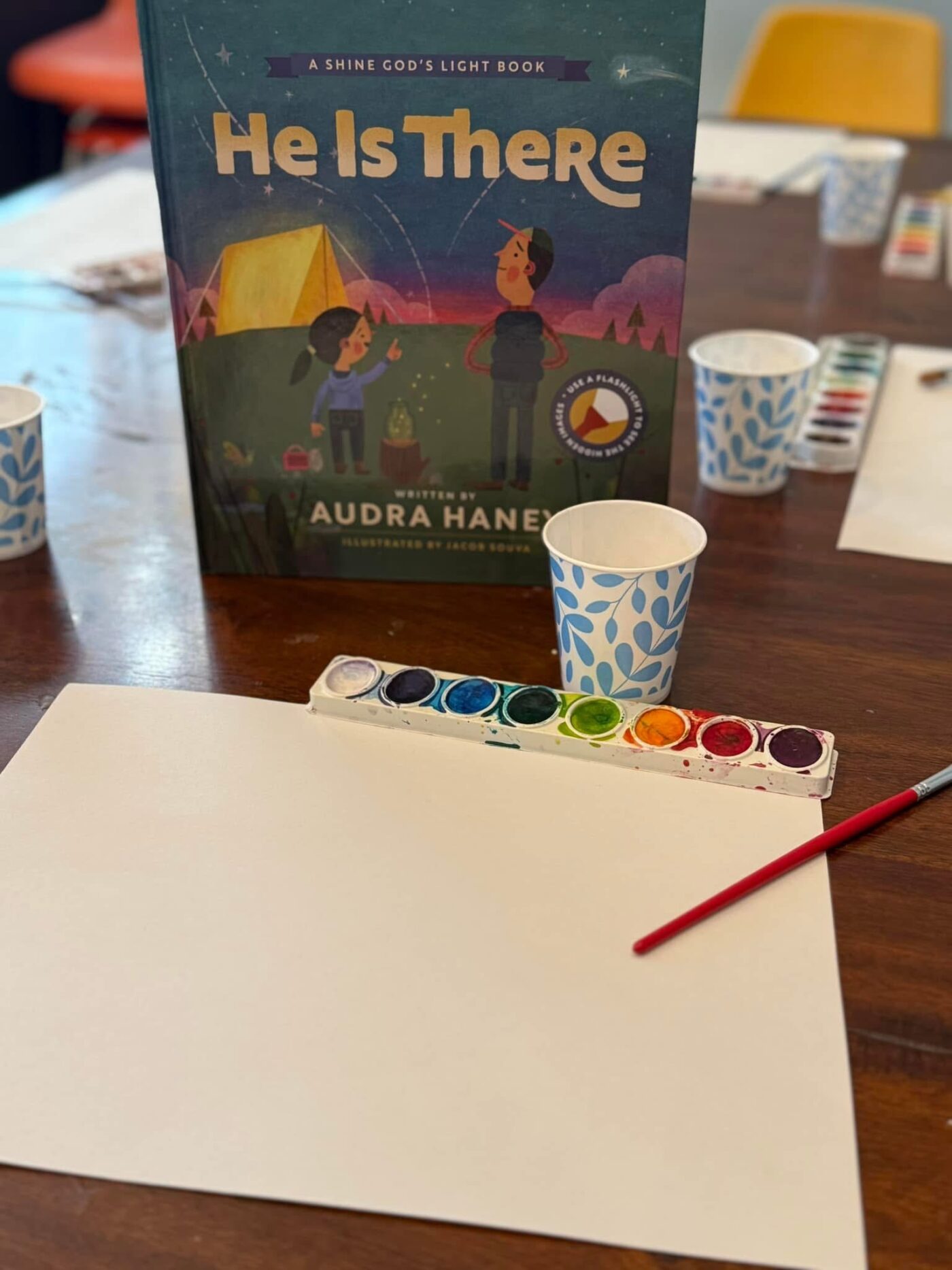
I was recently asked if I had a favorite art and faith project that I love to do with my preschoolers. The answer is yes. I have many. But when I think about an absolute favorite, one meaningful experience comes to mind.
A little backstory: I have spent the past 14 years in early childhood education, focusing on child led, play-based learning. Seven years ago, I stepped into a role as a children’s ministry director and knew I wanted to bring that same philosophy into the church. Research shows that children learn best through play. So why should play stop at church? As I stepped into this role, I reflected on how I could make the ministry more play-based while still teaching and creating a strong foundation for the children. During my reflection, I knew process art had to be a part of our class flow. Process art is an open-ended approach to creating where the focus is on the experience rather than the final product. It allows children to explore, make choices, and express themselves freely without step-by-step directions or expected outcomes.
Why Art Belongs in Faith Formation
Many of my favorite experiences with children involve process art, art that is child directed rather than adult directed. Unlike crafts or product focused art, which emphasize a finished outcome, process art is just that: the process of wondering, exploring, and creating in a way that is led by the child.
In faith formation, this matters deeply. When we remove step-by-step instructions, we make space for conversation, wonder, and connection. Instead of telling a child where to glue a googly eye, we can sit beside them, talk about God, ask questions, and listen.
Art becomes more than an activity. It becomes a space where children can encounter truth, relationship, and belonging.
The Activity: Crayon Resist
One of my favorite process art activities is a simple crayon resist technique. It beautifully illustrates that just because we cannot see something does not mean it isn’t there.
Before the activity, I write the word GOD on white paper using a white crayon. The children cannot see it, but it’s there.
What You’ll Need
- White paper, cardstock or watercolor paper works best
- White crayon
- Watercolor paints
- Paintbrushes
- Cups of water
- Optional, plastic tablecloth for easy cleanup
How It Works
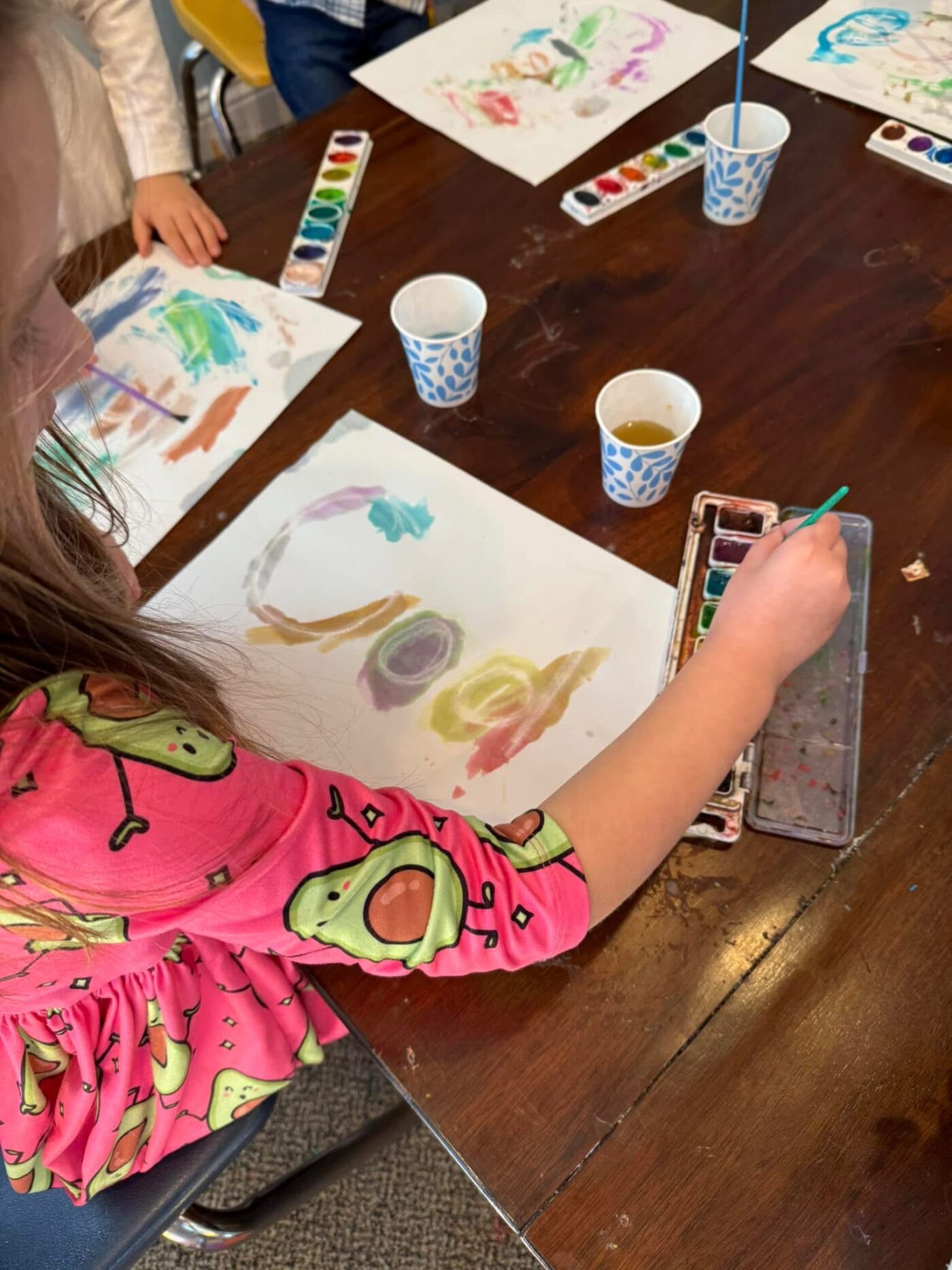
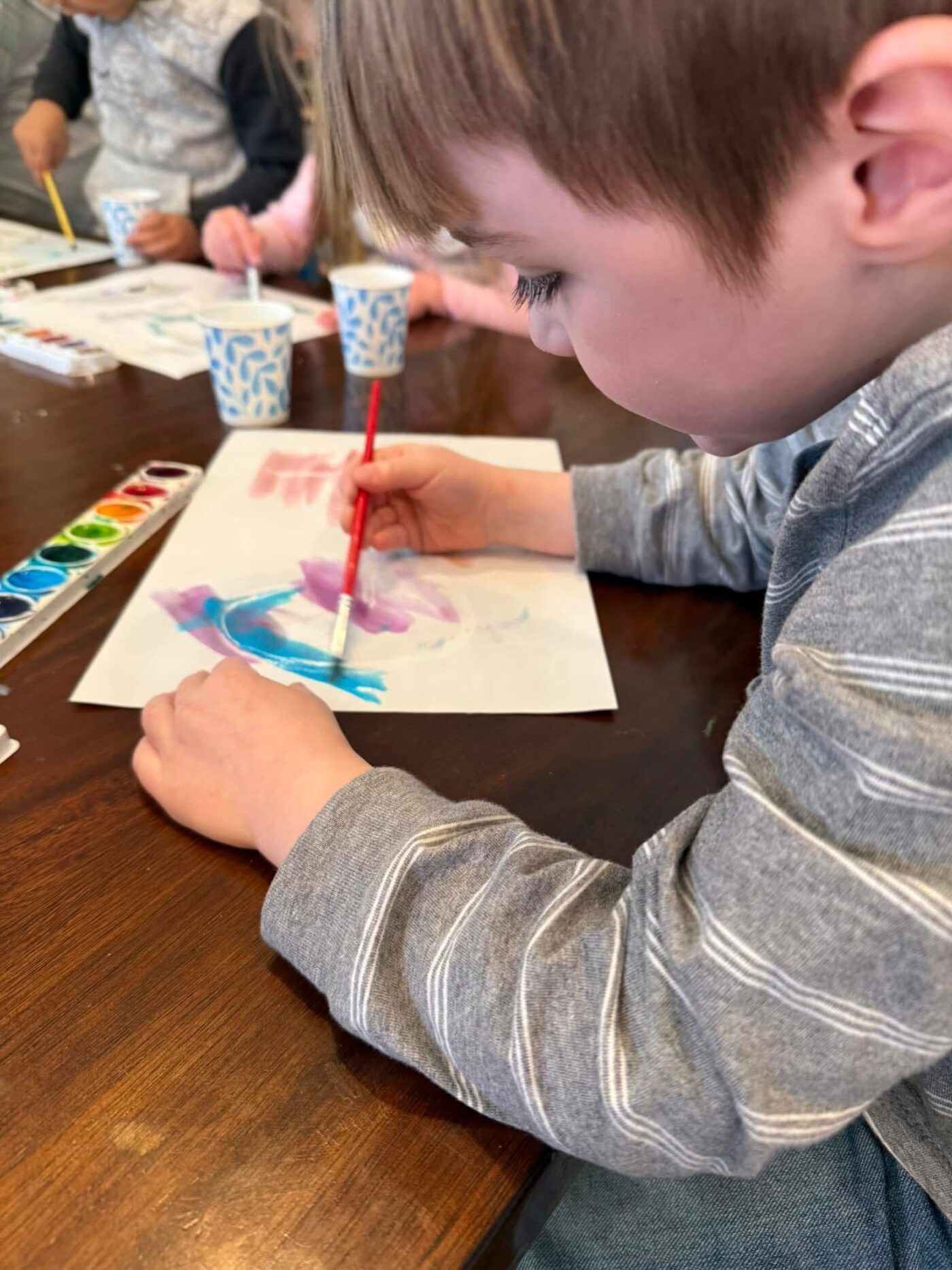
Invite children to paint freely across their paper using watercolors. Encourage them to explore colors and cover the entire page. As the children begin to paint, the watercolor resists the wax of the crayon, revealing the surprise.
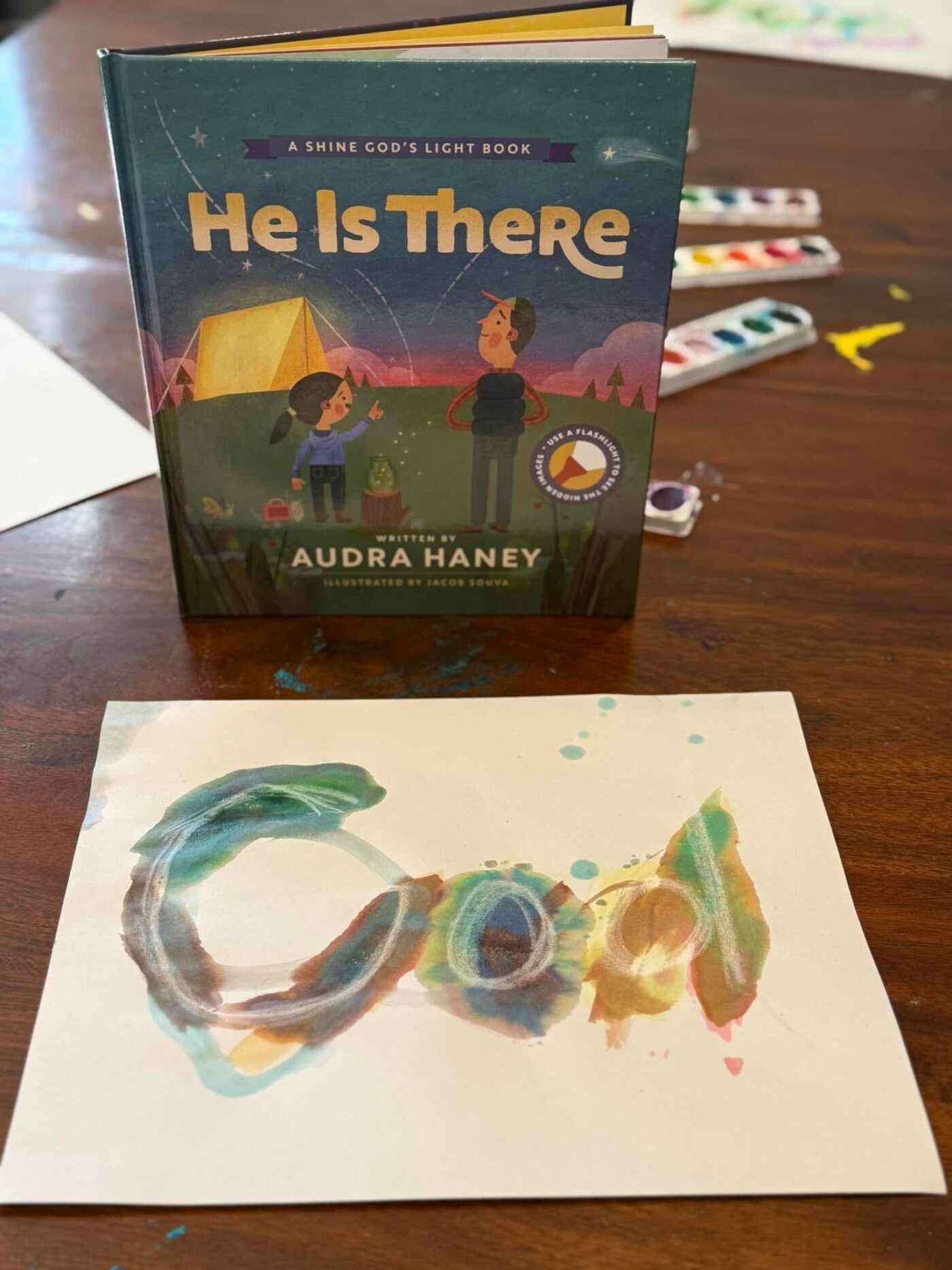
As they paint, something begins to happen. The invisible word GOD slowly reveals itself.
While they work, engage them in conversation:
“What do you notice happening?”
“Something is appearing that we couldn’t see before.”
When the word becomes visible, you can gently guide the connection:
“Even though we couldn’t see the word, it was there the whole time. God is like that too. We may not see Him, but He is always with us.”
You can support this truth with Scripture:
- Matthew 28:20
- Isaiah 41:10
- Joshua 1:9
I also love pairing this activity with the book He Is There by Audra Haney, which reassures children of God’s constant presence in a simple and comforting way. Audra Haney supports this concept by saying, “He paints the faithful sunrise…He leads the birds in morning song…He billows rolling thunder.” We may not see God actually painting the sunrise, leading the birds in song, or conducting the rolling thunder, but we can use our senses to know our Creator has a hand in all of these.
Bringing This Into Your Ministry or Classroom (Teacher Tips)
Prepare ahead of time. Write the word lightly but firmly so it resists the paint well.
Focus on process, not product. Let children choose colors and painting styles freely.
Sit with the children. This is where the real ministry happens in conversation and connection. Follow their lead. Some children will notice quickly, others slowly. Let discovery unfold naturally. Adapt for all ages. Even toddlers can participate with simple painting, while older children can engage more deeply in discussion.
What Happens When We Make Space for This
When we make space for open-ended creativity in faith settings, something meaningful happens.
Children experience truth, not just hear it.
They discover, rather than simply being told.
They feel seen, heard, valued, and loved.
And in a quiet moment, while paint brushes move and hidden words appear, children begin to understand something profound:
God is present.
Even when we cannot see Him.
He is there.
Guest Blogger
-
Andrea Miller
Andrea McCormick Miller is a children’s ministry director and early childhood educator with over 14 years of experience advocating for play-based, child-led learning. She is passionate about creating environments where children can explore, wonder, and grow through play, and she views play as her ministry. Andrea enjoys developing curriculum and resources for children and family in her ministry. She is a wife and mother of three who loves spending time with her family. Andrea loves spending time outdoors and finding joy in the little things.