
You walk into a Sunday school classroom to see twenty identical paper baskets with fish and loaves, or twenty of the same cotton ball sheep.
The next Sunday, twenty kids hand their parents the exact same project. It looks cute. Parents love it. But what did the children actually learn? What reflection went into that “art”?
Crafts feel productive. It feels like we are reinforcing Bible stories. But are we allowing kids to be creative in the image of their creative Father with these crafts? Which one actually forms children — art or crafts? Art, not crafts, invites the whole child to engage with stories in a way that adult-led crafts cannot do.
Defining the Difference
What is a craft?
Crafts are product-driven. There’s a right way and a wrong way to do crafts. Even if you allow the child to decide which color to use, the child’s choice is very limited. Crafts are also adult-led, with often step-by-step instructions and examples and models of what the desired outcome should look like.
With crafts, the emphasis is on the finished object, not the process — what it took for kids to get the result. These often also rely on adults pre-cutting shapes and prepping lots of pieces, kids being told to color inside the lines and where to glue.
What is open-ended art?
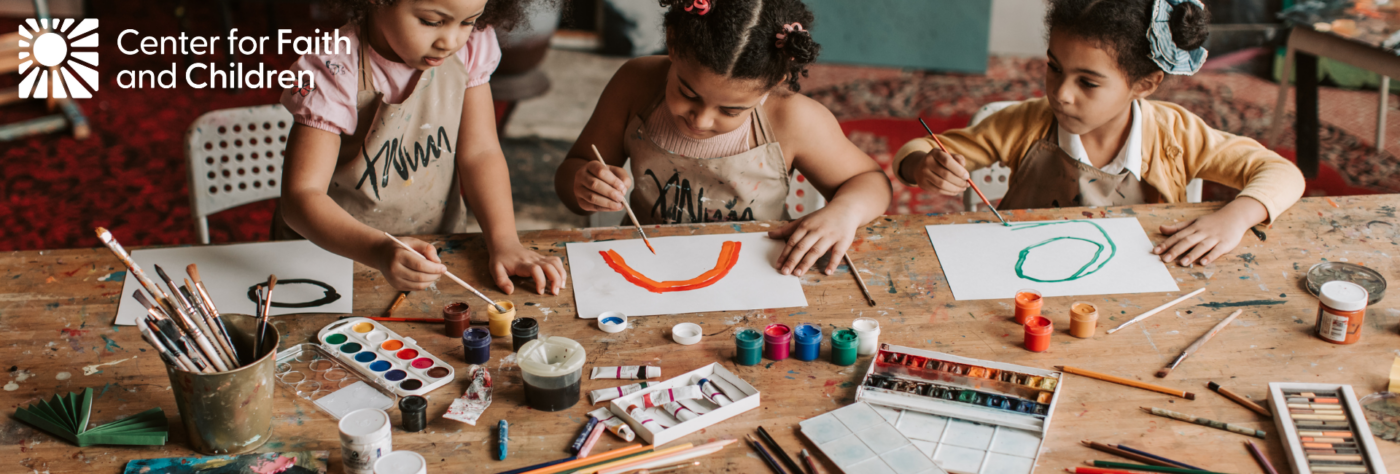
Open-ended art, or process art, is not dependent on the end result. It looks at what is going on throughout the creation of art. Open-ended art is also child-directed — they make most of the decisions. The leader may decide what materials to put out, but the child decides which of those materials to use and how to use them. In this process art, the emphasis is on exploration, experimentation, expression, and creativity. This gives children the space to reflect on what they’ve heard and to make meaning of it through their art. Some examples of this are painting, collage materials, and clay with no model to copy.
Why It Matters Developmentally
How young children actually learn?
Children ages two to six are concrete thinkers. They learn through their senses and through experiences. When we walk them step by step through a craft project, what they are learning is how to follow directions — which is not a bad skill for them to learn, but it is different from what we’re actually hoping they learn most of the time when we are inviting art into our Sunday school classrooms.
While observing and mimicking are ways that children learn faith at this age, that is mostly through chosen practices and through play, not being directed step by step through these actions. Crafts ask children to execute. Art asks them to think.
One of the things I’ve experienced with young children doing crafts is more stress and frustration because it doesn’t look like the adult’s example. That is not something we want to intentionally cause children to experience.
What open-ended art builds?
When children have the opportunity to reflect and to think through open-ended art, they are not only practicing creativity, but they’re also growing in their executive function skills, such as decision-making, problem-solving, and persistence.
This art also helps build emotional language, as art gives form to feelings words cannot yet hold — especially for young children who may not have the vocabulary to describe what they’re feeling.
Open-ended art also helps with intrinsic motivation. Children learn to value effort, not approval. This is so important as children learn to own their faith. As they grow, we want them to be intrinsically motivated — to have their own motivation to pursue and to reflect on God and his word, not just follow the directions of a teacher.
Finally, open-ended art helps children’s imagination grow. The sanctified imagination is something we do not use often enough as adults, and by supporting that in early childhood in church, it helps the child learn how to connect their imagination — this beautiful gift from God — back to him. And it is the same thing they will need as they grow in their faith.
The developmental cost of crafts-only environments
As I mentioned, stress and frustration previously with step-by-step crafts, there are also other developmental costs to craft-only environments.
One is that it creates this inner monologue in children of “Did I do it right?” — which reinforces external validation. In the last section, we talked about intrinsic motivation. Here, we see that these crafts reinforce external validation and external motivation.
Crafts-only also suppresses creative risk-taking. We need children to be able to practice taking safe risks now, so that as they grow, they will be able to say yes to the bigger risks that God may place in front of them. Art is a safe way for children to take those risks.
Finally, craft-only environments can unintentionally communicate that there is only one right way to respond to God — that God and/or the church expects every Christian to look the same, act the same, respond the same way. And that’s just not how we were made. So when we create crafts that all look the same, there is a hidden message in there that unintentionally communicates something we never meant to tell children.
The Theological Case
Imago Dei and creativity
In Genesis 1, the very first thing we learn about God is that he is a Creator. We also then learn that we are made in his image.
This includes children.
Children are made in the image of a creative God, and therefore, we — and they — are makers.
Crafts let children assemble. Art lets them create. Crafts let them follow through with somebody else’s ideas. Art lets them have ideas and bring them to life. Theologically, we honor the image of God in children when we give them creative agency.
Space, not prescription
When we look at the teachings of Jesus, Jesus rarely told people exactly what to think. He told stories, asked questions, and created space for people to think and reflect. Open-ended art mirrors this pedagogical posture of Jesus.
When we create space for children to reflect and make meaning, we make space for their capability, and we speak life into their faith — that we trust they can hear from God, and we trust that God can speak to them. Ministry is often most powerful when it creates space, not when it fills it.
Beauty as spiritual formation
Engaging with beauty is not simply decorative — it is formative. In Exodus 35, we see that the spirit filled craftsmen, giving them skills to create beauty. God is the ultimate creator of beauty, and we get to join him in his work, and we get to invite children to join in his work.
This is part of whole-child formation. It includes the aesthetics. It includes the mind and the imagination and the hands and the fingers — and maybe even the feet. Who knows what parts of a child might use to create something beautiful.
Practical Reframe for Ministry Leaders
Common objections, honest responses
We might hear that crafts are easier to manage. True. But easier is not the same as better. Easier for whom — for the adults? For the parents, the teachers? Easier to pass off to the volunteers? But that’s denying children something special.
We also hear that parents want to see a product, and it helps parents understand what the Bible story was — if there’s a clear connection between the craft sent home and what was taught in class. But instead of helping them understand the story through the craft, help parents understand what process art is building and how it helps their child form faith and grow in their image-bearing.
Finally, some might say, “I don’t have the budget.” Open-ended art is often cheaper than crafts, as you can be creative — and children can be creative — with the supplies being used.
Where to start
If you were to start with process art and you’ve been doing crafts each week, maybe start by just swapping out one craft per month for an open-ended invitation. You might pull out materials with no instructions and watch what happens with the children. Display children’s work as-is, and resist the urge to fix it or offer ideas of how they might complete it. Or you could even just start by putting out blank paper instead of coloring sheets one week.
It doesn’t have to be fancy, and it may not look pretty, but it will help children grow in their faith more than the crafts.