
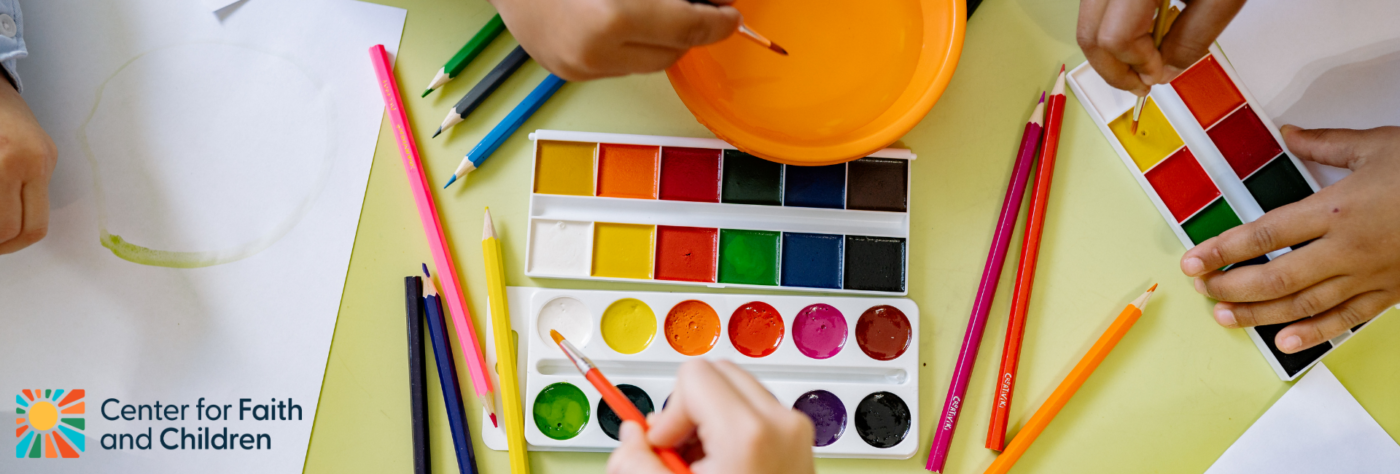
You want to bring process art to your children’s ministry, but you’re walking up and down the aisles of Hobby Lobby or Michaels with no idea where to start. Open-ended, or process, art is actually much simpler and often cheaper than the Pinterest-worthy crafts you may have been using until now. By the end of this post, you will have a simple list that is budget-friendly and will give you the confidence to walk in, set out the supplies, and watch as students create.
If you need motivation or want to understand why we should pursue open-ended art and not identical products, go back and check out our blog post, “Why Art, Not Crafts for Early Childhood.”
Principles for Choosing Art Supplies
As we choose and curate art supplies, we want to be intentional and wise stewards. Here are a few things you can consider as you build your collection of art supplies.
Fewer is Better
Have you ever suffered from decision fatigue or felt overwhelmed by too many options? Well, young children can too. So we don’t have to provide an entire art supply section from Hobby Lobby to offer choices to kids. Young children can start with three to five items, and when you’re first introducing open-ended art, you may want to start with only two or three.
As you consider which supplies to offer children, the quality of the materials and their variety of uses is more important than quantity.
For example, one small pack of quality crayons is going to be more useful than a large pack of crayons that don’t have good color. We don’t need perfect or the most expensive crayons, but we also want to show that we value children’s art and creativity by showing value in the materials we share with them. And broken crayons still color well.
Open-Ended by Nature
Another thing we want to consider as we choose materials is that we want materials with a variety of uses. This means that not just the project a child works on is open-ended, but that the tools we provide them are open-ended as well.
This is something we can think about as we select items, but also as we introduce them. We can ask: can a child do multiple things with these crayons? If not, it may not be a great item to start with.
For example, pipe cleaners have millions of uses, but a teacher-directed sheep craft only has one direction to go.
Safe and Sensory-Friendly
We also need to think practically. Nontoxic and washable supplies are strongly encouraged, especially with young children.
We also want to consider that young children have different sensory preferences. Some may love to get their hands messy, while others would prefer not to finger paint. Having brushes available, while staying open to students using their fingers, is a great way to account for the variety of sensory needs in your classroom.
If you are using messy things, it is always thoughtful to offer an alternative.
One last reminder: also consider parents as you decide what level of messiness you are going to introduce. If parents bring their kids to church in their Sunday best, then paint may not be the best choice. But if parents are aware that you’re going to be using art supplies with a possibility of mess, then that helps with their expectations.
Supply List Ideas
This is not an exhaustive list, and not everything on here is necessary. Choose what works for you and your children.
Paint
- Liquid tempera paint (washable)
- Watercolor sets (can be a small number of colors — spritz with water before setting out to make the color more vibrant)
- Dot markers/bingo daubers (watch out: these are not always washable)
Drawing
- Crayons
- Washable markers, in a variety of sizes
- Chalk
- Pencils (poor erasers can cause lots of frustration)
- Colored pencils
Collage
- Tissue paper of various colors, designs, shapes, and sizes
- Magazines and catalogs for ripping
- Fabric scraps, yarn, and ribbon pieces
- Natural materials (consider inviting children to help you collect these materials)
- Scrapbook paper
Adhesives
- Glue sticks
- Glue dots
- White school glue (online you can find a variety of ways to present it rather than setting out the full bottle.)
- Tape, including masking tape, washi tape, and regular tape
Clay and Dough
- Air-dry clay (bought or homemade)
- Play dough in different colors and scents (bought or homemade)
- Plastic or wooden tools
- Cookie cutters
Canvases to Create on
- White computer paper (a must-have)
- Various other sizes and colors of paper
- Packaging paper
- Large paper for floor and table work
- Canvas boards
- Cardboard
Other Random Goodies
- Pipe cleaners
- Popsicle sticks
- Straws
- Blank wooden pieces (coins, dolls, cubes)
- Paper punches
- Stamps and ink pads (washable)
- Stickers
Recyclables
- Toilet paper tubes
- Leftover church bulletins
- Recycled bottles
- Fun food packaging
- Anything else children could adapt and create with
For a printable copy of this list, click here.
Budget Tips and Sourcing Ideas
Art supplies can be found almost anywhere for very little. Invite your congregation to donate leftover supplies they no longer need. You may be surprised by items you hadn’t thought of.
- Look at the Dollar Tree or dollar stores for basic supplies, but consider cost per item when shopping there
- Amazon also has lots of bulk supplies
- Ask families to donate ribbon, fabric scraps, magazines, paper tubes, etcetera
- Look at what church materials are being recycled: envelopes, bulletins, random pieces of paper or supplies no longer used
- Thrift stores often have great finds for brushes or even containers to organize
- Consider asking at varied times of year. If you always ask in September, you’ll get more school-type supplies, but if you also ask in January, you may get leftover Christmas supplies that add variety to what you collect
Setup and Storage Ideas
Use whatever system works best for your space and volunteers, but here are some things I have discovered work well.
- Store items in clear containers or labeled bins so they are easily transported from where you store them to where you use them with children, and so children can easily help put things away.
- Keep the same core items set up for a few weeks, rotating in one new item each week. This gives children a chance to return to supplies they’ve really enjoyed, without getting bored.
- Keep old shirts or aprons on hand so kids in their Sunday best have something to wear over their clothes if necessary.
- Teach kids how to help you clean up.
- If you have a congregation member who loves to organize, this is a great opportunity for them to share their skills with your ministry.
Conclusion
We are excited for you and your children to create together with the Holy Spirit. We pray this list is a helpful resource. Curating art supplies does not need to be overwhelming. You don’t need a big budget or a lot of supplies to offer children an opportunity to create something meaningful. Offering children good materials is an act of stewardship, and it honors that children are image bearers of their Creator.
If you are ready to try, start with two to three items and create an open-ended invitation this week.